

Medjool Dates: What They Are, How to Buy Them, and How to Use Them
Last updated: June 2026
Key Takeaways
- Medjool dates are a large, soft date variety with a distinctly caramel-sweet flavour and chewy, almost fudge-like texture.
- They differ from everyday varieties like Oman, Fard, and Kalmi dates in size, moisture content, and intensity of sweetness.
- Good ones feel plump and slightly sticky; dry, crystallised skin is a sign of age.
- A typical serving is two to three pieces (60–75 g); they work well as a natural sweetener in cooking and baking.
- Store them in an airtight container at room temperature for up to four weeks, or refrigerate for up to three months.
If someone has tasted a date and called it "almost like caramel toffee," they were probably eating a Medjool. These large, dark-brown fruits have a flavour that stands apart from other date varieties. They are soft, a little sticky, and noticeably sweet. This guide covers what medjool dates actually are, how they compare to the dates most Indians buy regularly, and how to use and store them well.
What Are Medjool Dates?
Medjool dates originated in Morocco. Today, they are widely grown in the Middle East, parts of the US, and North Africa. In India, they are sold as an imported variety, which is why they tend to cost more than locally traded dates.
The fruit is harvested in late summer and early autumn. At peak ripeness, the skin darkens to a deep reddish-brown and the flesh becomes soft and moist. That natural moisture is the main reason they feel so different from drier date varieties.
Each date contains a single long pit. The flesh-to-pit ratio is generous: the fruit is large enough that you still get a good mouthful of flesh after removing the seed. The flavour has notes of caramel and honey, with a mild richness that does not taste artificial.
Nutritionally, like all dates, they are mostly carbohydrates (primarily natural sugars), with some dietary fibre, potassium, and magnesium. They do not contain added sugar or preservatives in their natural dried form.
How Medjool Dates Compare to Other Varieties
Not all dates taste or feel the same. Here is a straightforward comparison of the varieties you are likely to encounter in India:
| Variety | Size | Texture | Sweetness | Common Use | Approx. Calories per 100 g |
|---|---|---|---|---|---|
| Medjool | Large | Soft, chewy, moist | High, caramel-like | Snacking, baking, smoothies | ~277 kcal |
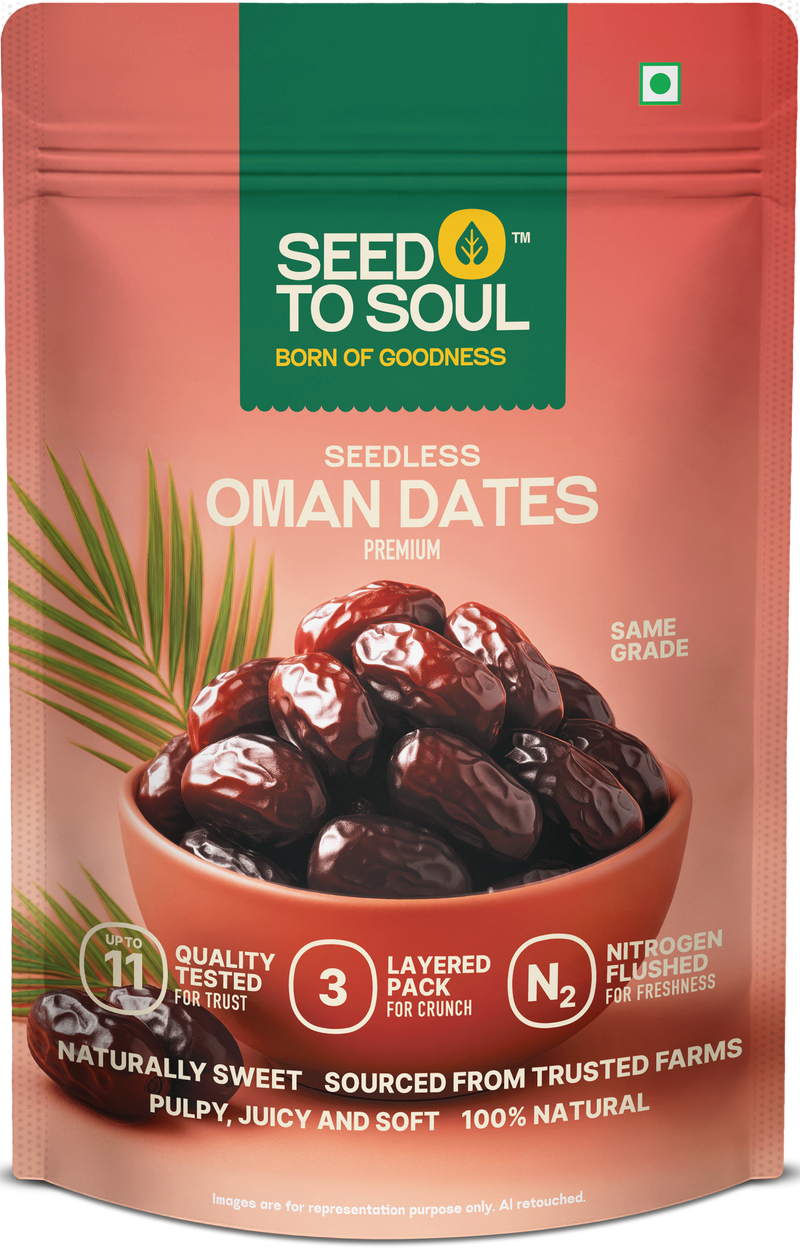
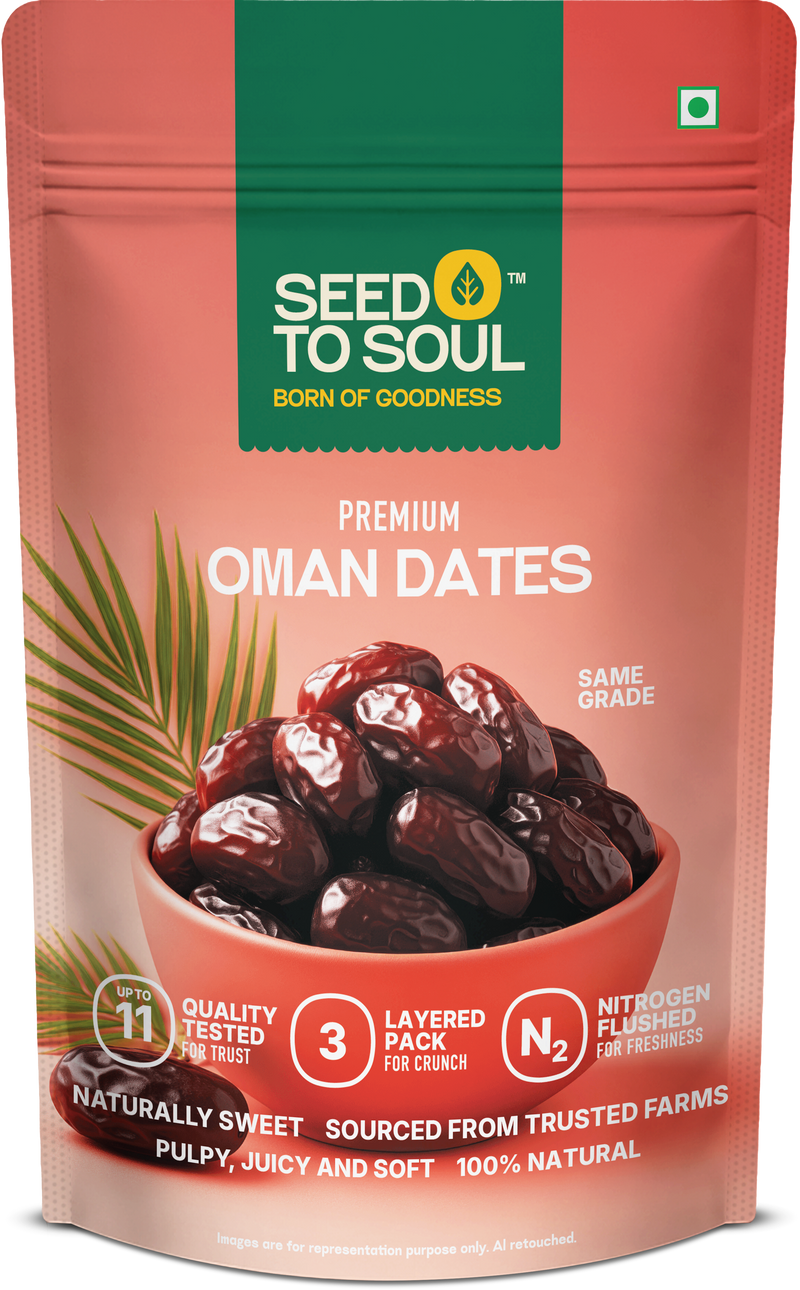
| Oman | Medium | Semi-soft | Moderate, mild | Everyday snacking, gifting | ~280 kcal |
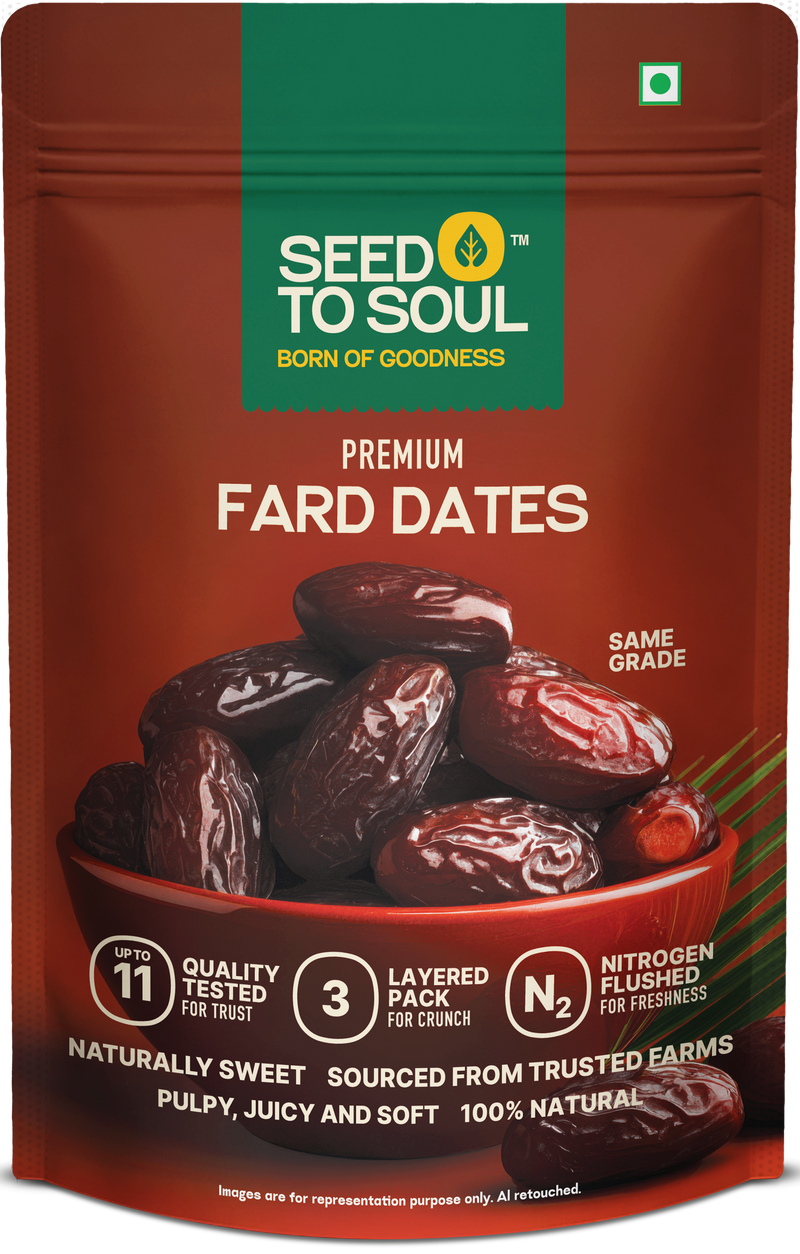
| Fard | Medium | Firm to semi-soft | Moderate | Everyday snacking | ~275 kcal |
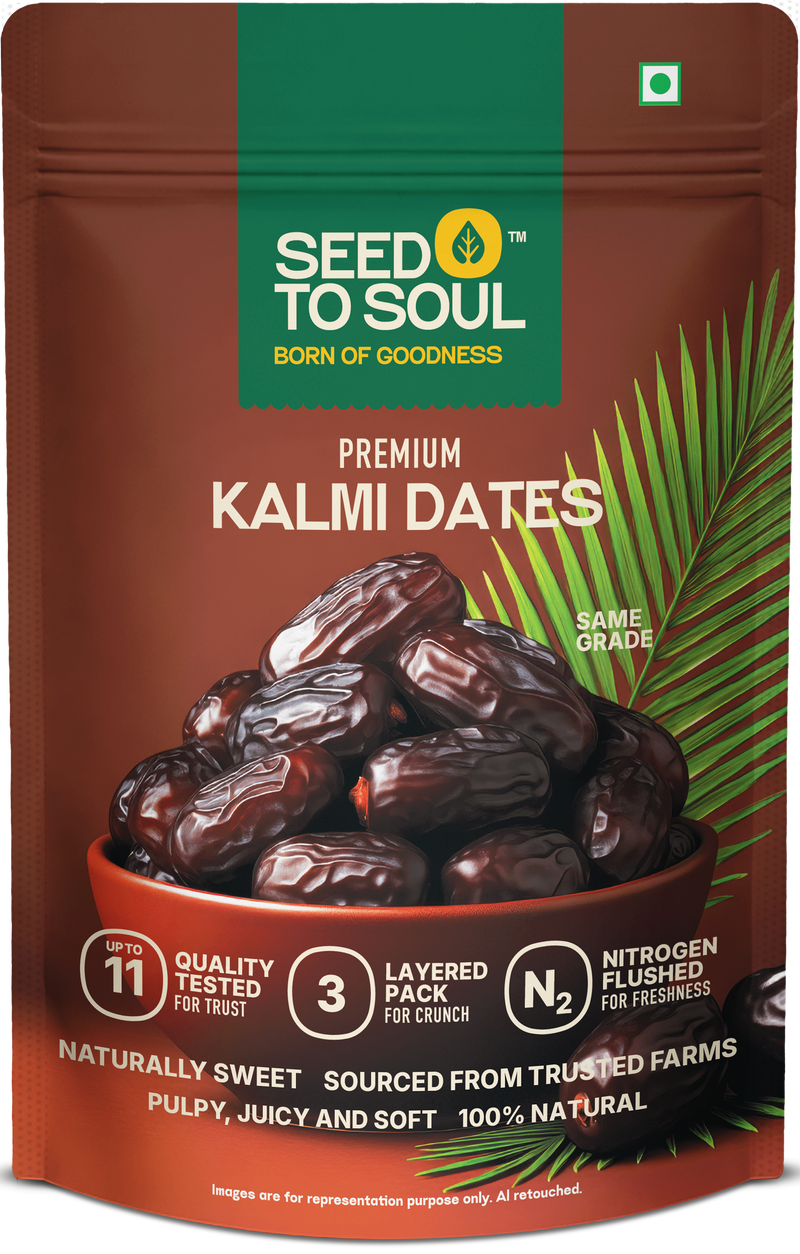
| Kalmi | Small–medium | Firm, slightly dry | Mild to moderate | Daily snacking, cooking | ~270 kcal |
| Arabian | Medium–large | Soft | Moderate–high | Snacking, tea-time | ~275 kcal |
(Calorie figures are approximate and sourced from USDA FoodData Central. Actual values vary by batch and moisture content.)
The key difference is moisture. Medjool dates are picked and packed at a higher moisture level, which gives them their signature soft texture. Most other varieties are firmer and less intensely sweet.
If you eat dates regularly and want to explore what's available, our dates collection lists several Indian-market varieties side by side.
What Good Ones Look Like (and Feel Like)
Buying dates online means you can't squeeze them first. So here is what to look for from a product description, image, and delivery experience:
Skin: Should look shiny and slightly wrinkled, not cracked or dried out. A little surface sugar crystallisation (tiny white specks) is normal if the dates are older, but heavy crystallisation means moisture has been lost.
Colour: Deep reddish-brown to almost black. Patches of lighter colour near the tip are fine. Uniformly pale or orange skin suggests the fruit was harvested before full ripeness.
Texture on arrival: They should feel soft when pressed gently through the packaging. If they arrive hard and brittle, something went wrong in storage or transit.
Smell: Fresh and lightly sweet, like caramel or dried fruit. An off or fermented smell means the batch has turned.
Pit: Should slide out cleanly. If the flesh is so dry it grips the pit, the fruit has lost too much moisture.
For a full breakdown of what separates a good date purchase from a disappointing one, read our guide on choosing dates online.
How to Use Them in an Indian Kitchen
These dates are versatile. Their natural sweetness means you can use them in place of refined sugar in several preparations. Here are some practical ideas:
As a direct snack: Eat two to three with a small handful of nuts. Walnuts and cashews work particularly well because their slight bitterness contrasts the sweetness. Try pairing them with something from our mixed dry fruits range for a quick and filling snack.
In energy balls: Blitz pitted dates with rolled oats, cocoa powder, and almond butter. Roll into balls and refrigerate. No baking needed.
As a sweetener in smoothies: A single pitted date blended into a milk or yoghurt smoothie adds sweetness and body without separate sugar.
In chutneys: Date-tamarind chutney (imli khajoor chutney) is a classic Indian condiment. The soft flesh of Medjool dates breaks down easily and gives the chutney a smooth consistency.
In festive sweets: Dates stuffed with nuts, or chopped and folded into laddoos, are a common Diwali and Eid preparation. They work well in gift boxes, especially paired with whole nuts.
How to Store Them at Home
Storage is where many people go wrong. Dates spoil slowly but they do lose quality if kept carelessly.
Room temperature: Keep in a sealed airtight container, away from sunlight and heat. Fine for two to four weeks. In Indian summers, err toward the shorter end of that range.
Refrigerator: Airtight container or zip-lock bag. Keeps well for two to three months. Bring them to room temperature before eating; cold dates feel firmer and less flavourful.
Freezer: Spread out in a single layer in a freezer bag, removing excess air. Keeps for up to a year. Thaw at room temperature for 30 minutes before use.
Avoid: Open bowls, humid cupboards near the stove, or any container that is not fully sealed. Moisture and insects are the main threats.
One practical tip: if you buy a large pack, portion it into smaller containers. Only open what you need. This keeps the rest fresher for longer.
Sources
- USDA FoodData Central — Dates, medjool: fdc.nal.usda.gov (nutritional composition data)
- FSSAI (Food Safety and Standards Authority of India) — General guidelines on labelling and storage of dried fruits: fssai.gov.in
- Food and Agriculture Organization of the United Nations (FAO) — Date Palm Products: Agricultural Services Bulletin No. 101 (variety and origin reference)
- National Horticulture Board (India) — Dried Fruits: Import and Market Overview (trade and variety context)
FAQs
Are medjool dates the same as regular dates?
No. Medjool dates are a specific variety known for their large size, soft flesh, and caramel-like sweetness. Most "regular" dates sold in India are smaller, firmer varieties such as Oman or Fard dates.
Do medjool dates need to be refrigerated?
Not always. At room temperature, in an airtight container away from direct sunlight, they keep well for two to four weeks. Refrigeration extends that to three months, and freezing keeps them good for up to a year.
How many should I eat per day?
A common serving is two to three pieces (roughly 60–75 g). They are naturally high in sugar, so portion size matters, especially if you are watching your overall calorie or carbohydrate intake.
Can I use them in cooking and baking?
Yes. They blend smoothly into energy balls, date-sweetened cakes, chutneys, and smoothies. They also pair well with nuts like almonds, cashews, and walnuts in trail mixes or festive sweet boxes.
What should I look for when buying them online?
Look for plump, moist fruit with shiny, wrinkle-free skin. Avoid packs where the dates look dried out, crystallised, or stuck together in a hard lump. Read our guide on choosing dates online for a detailed checklist.
How do medjool dates differ from Kalmi dates?
Kalmi dates are a South Asian variety, firmer and less sweet, often eaten as an everyday snack. Medjool dates are larger and softer, with a more pronounced caramel note. Both have their place depending on taste preference and intended use.
Written by Seed to Soul Dry Fruits Editorial Team
Browse our dates collection to find the variety that suits your taste. Not sure how to pick good dates online? Read our dates buying guide before you order.