

How to Choose Good Quality Walnuts Online
Last updated: June 2026
Key Takeaways
- Look for light golden-brown kernels with no dark patches, strong odour, or oily residue.
- In-shell walnuts last longer in storage; shelled ones are more convenient for everyday use.
- A good product listing shows origin, pack date, and ingredient list with no unnecessary additives.
- Kashmiri akhrot typically has a thinner shell and milder flavour compared to other varieties.
- Airtight packaging is the single most important factor that protects freshness during shipping.
Buying dry fruits online is convenient, but it comes with a real challenge: you can't touch, smell, or taste before you order. That matters a lot with akhrot, because the line between a fresh batch and a stale one isn't always obvious from a product photo.
This guide walks you through exactly what to look for — from kernel colour to packaging — so your next walnut order is one you're happy with.
What Makes a Walnut Worth Buying
The quality of a walnut kernel comes down to three things: appearance, smell, and origin.
Appearance. A good kernel is plump and light golden-brown, sometimes with a slight cream tone. Wrinkled, shrunken, or very dark kernels suggest age or poor storage. Some natural variation in shade is normal, but a batch where most kernels are deep brown or have dark patches on the inner surface is worth questioning.
Smell. This is the most reliable test. Fresh akhrot has a mild, clean, slightly earthy scent. Rancid ones smell sharp, bitter, or faintly like old oil. If a seller allows returns and you receive something that smells off, raise it immediately.
Origin and harvest season. Kashmiri walnuts are harvested between September and November. A product listed with a recent pack date, ideally within the current or previous harvest season, is much more likely to be fresh than one with no date at all.
Shelled vs. In-Shell: Which Should You Choose?
Both forms have real advantages. The right choice depends on how you use them and how quickly you'll finish the pack.
| Feature | Shelled (Akhrot Kernels) | In-Shell (Whole Akhrot) |
|---|---|---|
| Convenience | Ready to eat, no cracking | Requires a nutcracker |
| Shelf life (room temp) | 2 to 4 weeks | Up to 12 months |
| Shelf life (refrigerated) | 3 to 6 months | 12+ months |
| Freshness protection | Depends on packaging | Shell acts as natural barrier |
| Best for | Daily snacking, cooking, baking | Bulk storage, gifting, gradual use |
| What to check | Colour, smell, airtight seal | Shell integrity, weight, no mold |
If you're buying for everyday snacking or cooking, shelled kernels are the practical choice. Just make sure the packaging is airtight and the pack date is recent.
If you're buying a larger quantity to use over several months, in-shell walnuts offer better natural protection. The hard outer shell slows oxidation significantly.
You can find both options on the Seed to Soul walnuts collection.
How to Read an Online Listing Like a Pro
Product photos can be edited. Descriptions can be vague. Here's how to filter the useful information from the noise.
Check the ingredient list first. It should say one thing: walnuts. No added oil, no salt, no preservatives. If the listing says "100% natural" but doesn't show an ingredient list, that's a gap worth noting.
Look for a pack date or harvest year. Not all sellers include this, but the ones who do are signalling transparency. Avoid products with only a "best before" date and no manufacture or pack date, since that tells you nothing about when it was actually packed.
Read the weight and per-100g price together. A low sticker price sometimes means a smaller net weight. Check net weight clearly before comparing across sellers.
Scan the reviews for specific comments. Reviews that mention smell, texture, or freshness are more useful than star ratings alone. Look for patterns across multiple reviews, not just the most recent one.
Look at the packaging description. Zip-lock resealable pouches or vacuum-sealed packs hold freshness better than simple heat-sealed bags. If the listing doesn't mention packaging type, it's worth asking.
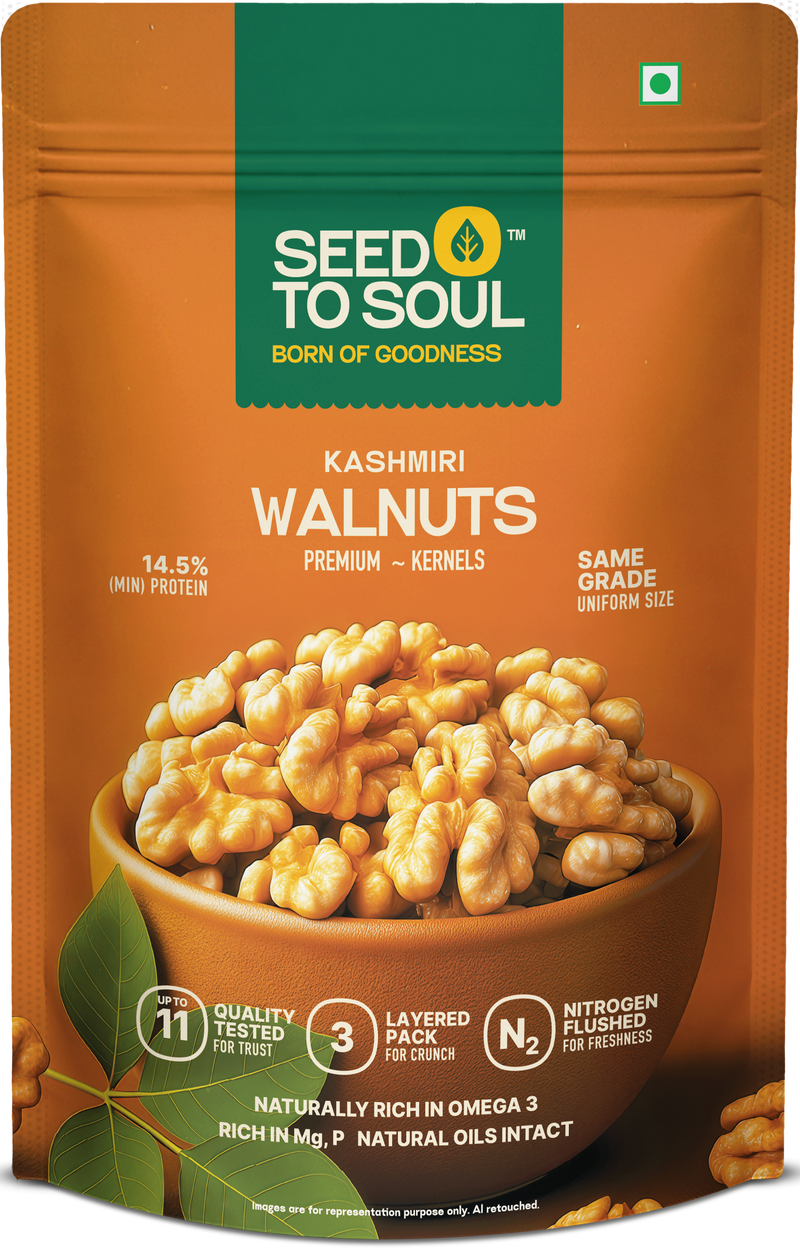
Once you've chosen a shelled option, the Kashmiri Walnut (Akhrot) from Seed to Soul is a good reference point for what a clear, honest listing looks like — origin stated, ingredient list minimal, packaging airtight.
Storage, Freshness, and Shelf Life
Even the freshest kernels go stale quickly if stored badly. Here's a simple guide to keeping them at their best after delivery.
At room temperature. Store in an airtight container, away from direct sunlight and heat. A kitchen cabinet away from the stove works well. Expect good freshness for 2 to 4 weeks.
In the refrigerator. An airtight glass jar or resealable bag works well. Keep them away from strong-smelling foods, as nut fats absorb odours easily. This extends freshness to 3 to 6 months.
In the freezer. For longer storage, freezing is effective. Use a sealed freezer bag and label it with the date. Thaw only what you need, and don't refreeze thawed kernels.
A quick freshness check before eating: take one kernel, snap it in half, and smell the cut surface. Fresh kernels smell mild and slightly sweet. A sharp or sour note means they've turned.
If you're also keeping other nuts at home, the same airtight storage logic applies. Check out the mixed dry fruits range if you're building a regular dry fruit pantry.
Red Flags to Watch for When Shopping Online
Not every red flag means a product is bad, but these are worth pausing on.
No origin information. "Walnuts" without any origin note (Kashmir, California, Chile) makes it harder to assess expected quality or harvest timing.
Very low prices with no explanation. Akhrot is a seasonal crop. If pricing seems unusually low, it may reflect older stock, lower grade kernels, or thin shells that broke during processing, leaving lots of broken pieces.
Listing photos that show only whole uncracked nuts. For shelled kernel products, you should see the actual kernel colour in the photos, not just the shell. Stock images of whole walnuts don't tell you much about what's inside the packet.
No return or freshness policy. A seller who is confident about their product quality will usually have a clear policy for stale or damaged goods.
Packaging that isn't described. If a listing says nothing about how the product is packaged, it may arrive in a simple polybag with no reseal option, which shortens shelf life noticeably.
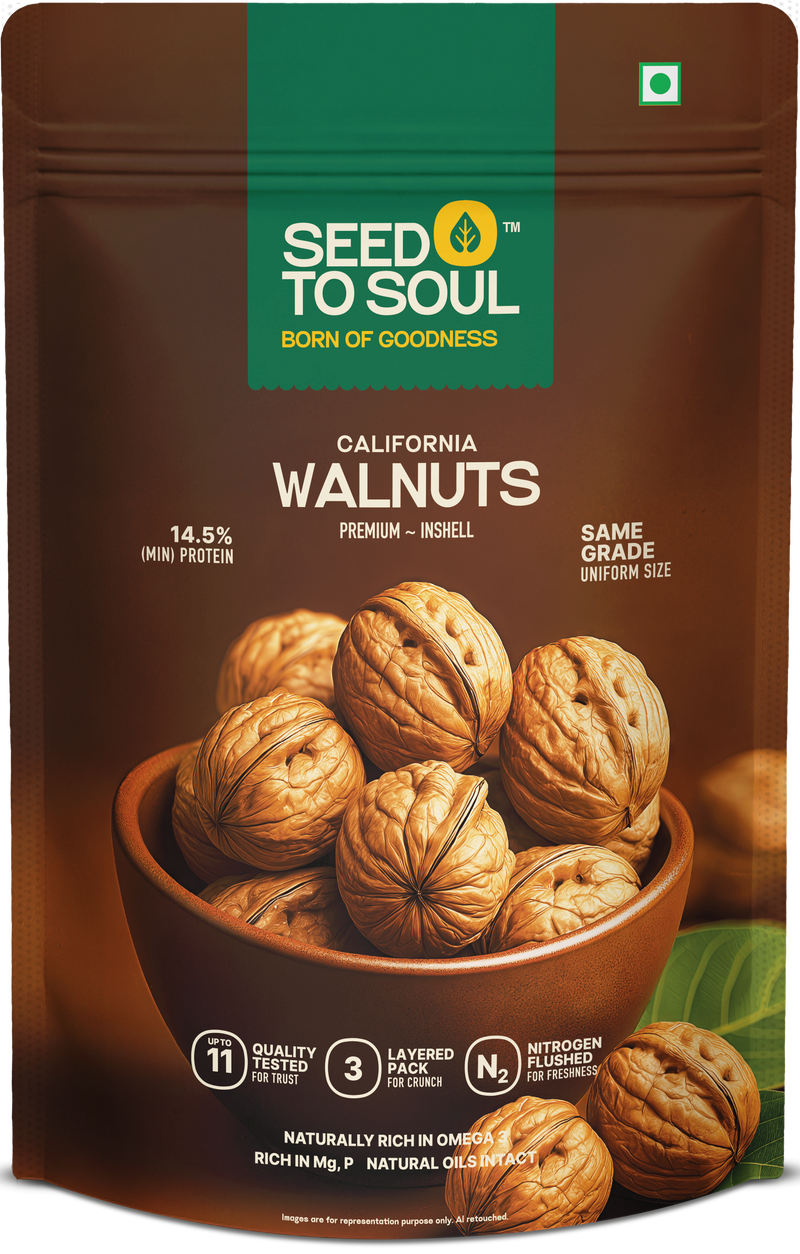
For in-shell options, the Walnut In-shell (Akhrot) is a useful example of how in-shell packaging should be described, with the shell acting as a natural protector through transit.
Sources
- FSSAI (Food Safety and Standards Authority of India): fssai.gov.in — for food labelling and packaging standards applicable to packaged dry fruits in India.
- National Horticulture Board, Government of India: nhb.gov.in — for walnut cultivation regions, harvest seasons, and production data.
- AGMARKNET, Directorate of Marketing and Inspection: agmarknet.gov.in — for commodity grades and market standards for dry fruits including walnuts.
- Codex Alimentarius (FAO/WHO): fao.org/fao-who-codexalimentarius — for international standards on dried fruits, labelling, and quality grading.
FAQs
How do I know if walnuts are fresh?
Fresh walnuts have a mild, slightly earthy smell. Rancid ones smell sharp, bitter, or like old paint. If you're buying in-shell, the shell should feel heavy for its size and show no cracks or dark stains.
What is the difference between shelled and in-shell walnuts?
Shelled walnuts have the outer shell removed, making them ready to eat or cook with. In-shell walnuts still have the hard outer casing, which protects the kernel and extends shelf life if you plan to store them longer.
Are Kashmiri walnuts different from regular walnuts?
Yes. Kashmiri akhrot comes from the Kashmir Valley and is known for thin shells and plump, light-coloured kernels. The thin shell makes them easier to crack, and the lighter kernel colour often indicates a milder flavour.
How long do walnuts stay fresh at home?
Shelled walnuts stay fresh for 2 to 4 weeks at room temperature in an airtight container. In the refrigerator, they can last 3 to 6 months. In-shell walnuts stored in a cool, dry spot can last up to a year.
What should I look for in a product description when buying online?
Look for the origin or sourcing region, harvest season or pack date, whether the product contains preservatives or added oil, and whether the packaging is airtight. A brand that lists these details is more likely to be transparent about quality.
Can I buy both shelled and in-shell walnuts from Seed to Soul?
Yes. Seed to Soul stocks the shelled Kashmiri Walnut (Akhrot) and the Walnut In-shell (Akhrot). Both are available through the walnuts collection.
Written by the Seed to Soul Dry Fruits Editorial Team.