

How to Choose Good Quality Pistachios Online (And Actually Get Fresh Ones)
Last updated: June 2026
Key Takeaways
- A naturally split shell is the clearest sign of a ripe, mature pistachio.
- Kernel colour should be green to yellow-green; pale or grey kernels indicate age.
- Always check the origin, packaged-on date, and ingredient list before buying online.
- Pistachio benefits come from the whole nut: protein, fibre, and unsaturated fats in one small kernel.
- Store in an airtight container, away from heat and moisture, to protect freshness after delivery.
Buying dry fruits online is convenient, but it also means you can't smell or taste before you commit. With pistachios, that gap between expectation and reality can be frustrating. You open the bag and find pale, rubbery kernels that taste faintly of cardboard.
It doesn't have to go that way. Knowing what to look for, what questions to ask, and which details actually matter will help you get pistachios worth eating. This guide walks through each step.
What Makes a Pistachio Worth Buying
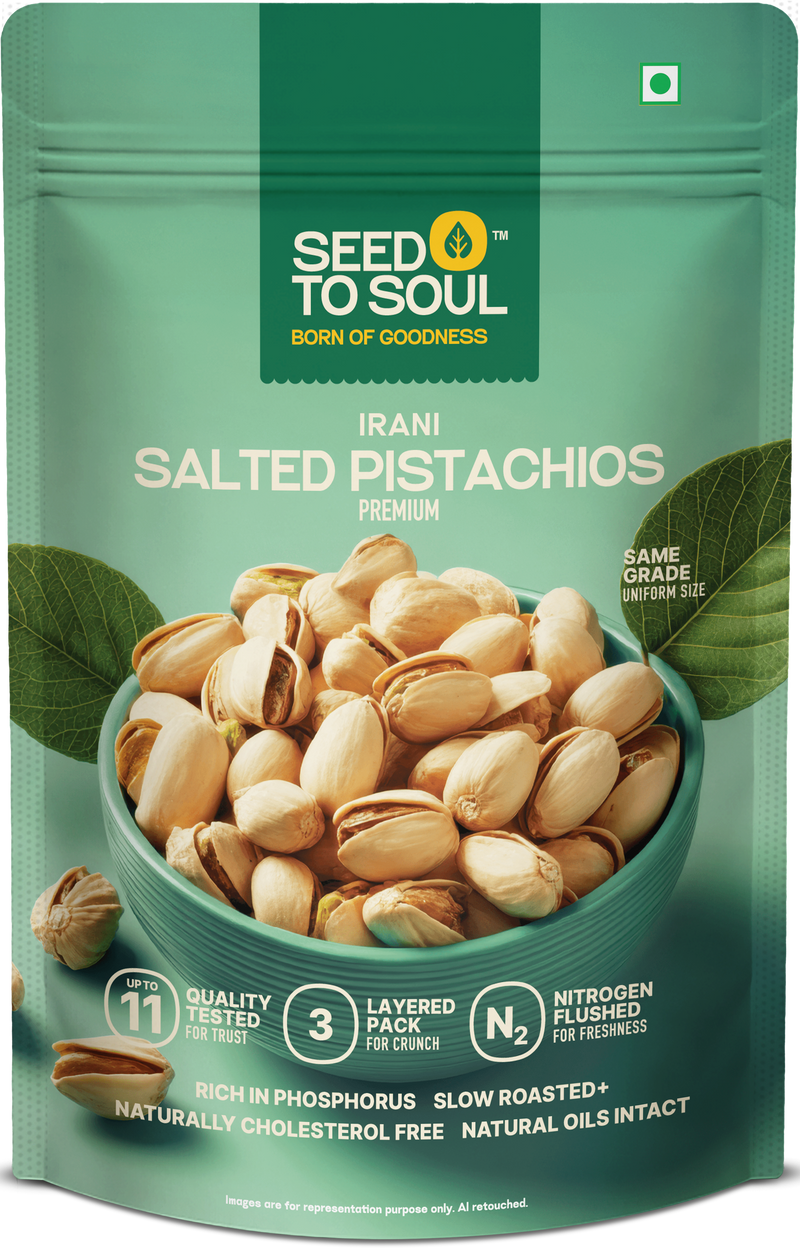
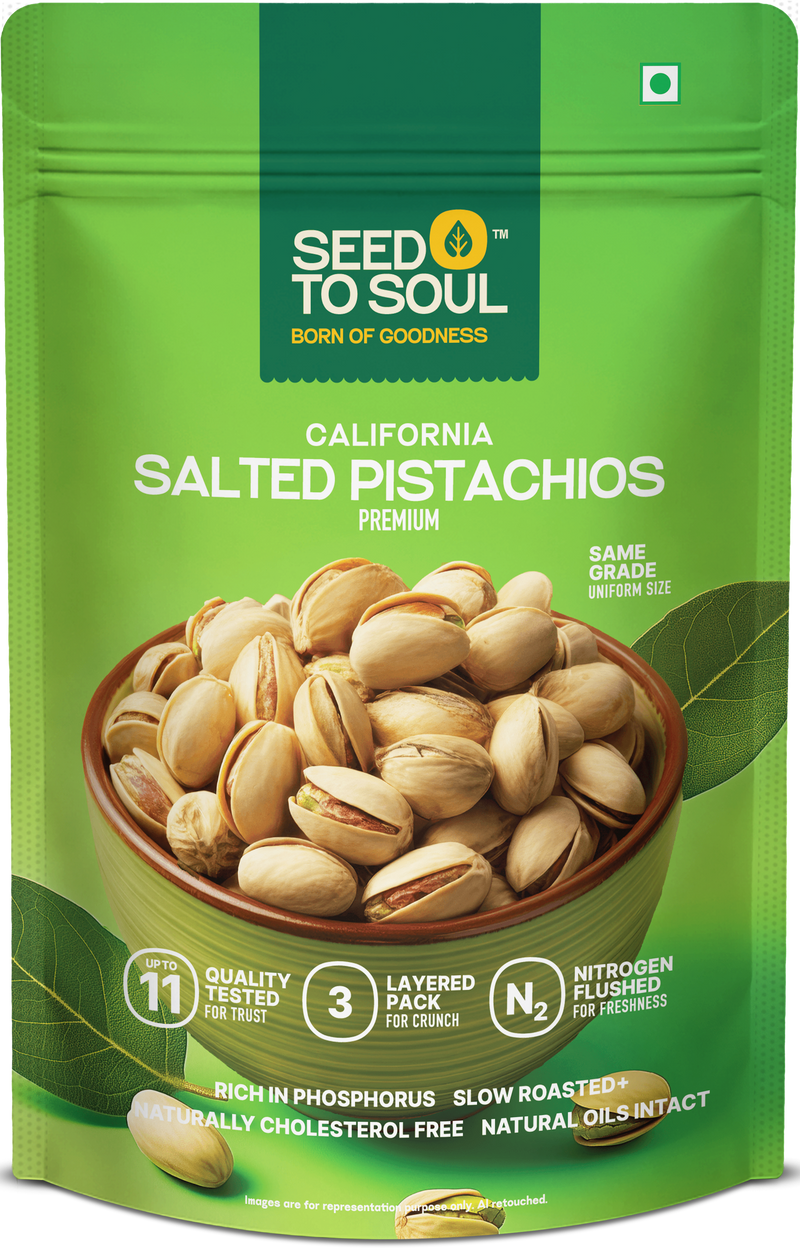
A good pistachio starts in the orchard. The nut is the seed of Pistacia vera, a tree that thrives in hot, dry climates with cold winters. Iran, the United States (California), and Turkey are the world's largest producers. Within India, you'll find imported nuts from all three regions.
The quality difference you notice in a handful of pistachios comes down to three things: harvest timing, post-harvest handling, and how long the nuts have been sitting in a supply chain. A nut harvested at peak ripeness, dried correctly, and packed without delay will taste noticeably richer and crunch cleanly between your teeth.
That's the standard worth holding sellers to when you browse online.
Key Signs of Fresh, Good Quality Pistachios
You can't touch a pistachio through a screen. But you can read a product page carefully and spot the signals that separate a reliable seller from one who doesn't know (or won't share) what they're selling.
Shell split: A naturally split shell means the kernel has grown to full size and the shell opened on its own during ripening. This is what you want. Mechanically forced shells look different and are a sign of under-ripe nuts.
Kernel colour: Open a pistachio and look at the colour. Fresh, raw kernels are vivid green. Roasted ones shift to a yellow-green. Both are fine. A white, beige, or grey kernel suggests the nut is old or was stored poorly.
Smell: Pistachios should smell faintly nutty and slightly sweet. Any rancid, sour, or musty smell is a sign of oxidised fats. With online purchases, read reviews that mention smell or taste. Other buyers will often flag this.
Texture: A fresh pistachio snaps when you bite it. Stale ones feel soft or chewy. Again, reviews are your friend here.
Moisture content: Shells should be dry and light. Heavy or damp shells can mean the nuts were stored in humid conditions, which encourages mould.
Pistachio Varieties: A Quick Comparison
Different origins produce noticeably different nuts. Here's a simple comparison to help you decide what you're buying.
| Origin | Shape | Kernel Colour | Typical Flavour | Common Use |
|---|---|---|---|---|
| Iran (Fandoghi) | Round, small | Bright green | Rich, slightly sweet | Snacking, gifting |
| Iran (Akbari) | Elongated, large | Deep green | Buttery, mild | Garnishing, gifting |
| California (Kerman) | Large, uniform | Yellow-green | Mild, clean | Everyday snacking |
| Turkey | Medium | Light green | Earthy, slightly savoury | Baking, cooking |
No single origin is objectively better. Iranian Akbari nuts are popular for gifting because of their size and appearance. California Kermans are widely available and consistent. Your choice depends on how you'll use them and what texture and flavour you prefer.
How to Read an Online Listing for Pistachios
A well-written product listing tells you more than you might expect. Here's what to check before adding to cart.
Origin: The listing should name the country and, ideally, the variety or region. "Pistachios" with no further detail is a red flag.
Format: Are these in-shell, shelled, roasted, salted, or raw? Each is a different product. Browse the pistachio collection at Seed to Soul to see how formats are clearly labelled.
Packaged-on or best-before date: Freshness matters more than most buyers realise. A "best before" date 12-18 months out from a recent packaging date is a reasonable sign. Avoid products where no date is visible or disclosed.
Ingredient list: For plain pistachios, the ingredient list should say "pistachios" and nothing else. For salted ones, it should say "pistachios, salt." Extra additives, flavour enhancers, or preservatives are worth noticing.
Pack size and seal type: Resealable packs or vacuum-sealed bags help maintain freshness after you open them.
Reviews: Filter for recent reviews. Look for mentions of freshness, kernel colour, and whether the shells were naturally split or forced.
Pistachio Benefits: What the Nut Actually Offers
Let's be direct about pistachio benefits, without overpromising.
A standard 30g serving (about 49 kernels) contains roughly 6g of protein, 3g of fibre, and 13g of fat, most of which is unsaturated. Pistachios also supply B vitamins including thiamine and B6, along with minerals like copper and manganese.
Those are real, measurable pistachio benefits that come from the whole nut's natural composition. They make pistachios a genuinely nutritious snack option compared to many packaged alternatives.
Pistachio benefits also include the fact that this nut is among the lower-calorie tree nuts per gram, though the difference across nuts is not dramatic. The fibre and protein content means a small handful tends to feel satisfying.
One more practical pistachio benefit: the shell. Having to open each nut in-shell naturally slows down how fast you eat. That's not a health claim, just an observation many snackers find useful.
If you prefer the convenience of ready-to-use kernels for cooking or topping a dish, shelled pistachios remove that step without losing any of the nut's nutritional value.
How to Store Pistachios Once They Arrive
Good storage protects the investment you've made in quality nuts. Follow these steps.
- Transfer to an airtight container as soon as you open the pack. Even resealable bags let in small amounts of air over time.
- Keep away from heat and light. A kitchen cupboard away from the stove works well.
- Room temperature: Pistachios stay fresh for about 3-4 weeks at room temperature in a sealed container.
- Refrigerator: Extend freshness to around 3 months. Make sure the container is fully sealed to prevent the nuts from absorbing fridge odours.
- Freezer: For longer storage (up to 12 months), freeze in a zip-lock bag with as much air removed as possible. Thaw at room temperature before eating.
One thing to avoid: storing pistachios near onions, garlic, or strong spices. The fats in pistachios absorb nearby smells quickly.
If you like having a variety of nuts on hand, a mixed dry fruits pack can be a practical way to try different nuts together, though each variety benefits from being stored in its own container once opened.
Making the Right Call at Checkout
Let's bring this together. When you're on a product page deciding whether to buy, run through this checklist quickly.
- Is the origin named?
- Is the format (raw, roasted, salted, shelled) clearly described?
- Is there a packaging or best-before date?
- Is the ingredient list clean?
- Do recent reviews mention good flavour and natural split shells?
If most of those boxes are ticked, you're likely looking at a product worth trying. If the listing is vague on all of these, move on.
For a starting point, roasted salted pistachios are a crowd-pleasing format: the shell is naturally split, the roast brings out a deeper flavour, and the light salt enhances the nut without masking it. They're also one of the easiest formats to judge freshness on, because a stale roasted pistachio is immediately obvious in taste.
Sources
- FSSAI (Food Safety and Standards Authority of India) — Labelling and display regulations for packaged foods, including mandatory date marking and ingredient disclosure requirements.
- USDA Agricultural Research Service — General composition data for Pistacia vera varieties grown in California, including moisture, fat, and protein benchmarks.
- FAO (Food and Agriculture Organization of the United Nations) — Global pistachio production data, key growing regions, and post-harvest handling guidance.
- Codex Alimentarius Commission — International food standards for tree nuts, including quality grading descriptors for shell split, kernel colour, and moisture content.
FAQs
What are the main pistachio benefits?
Pistachios are a good source of protein, fibre, and healthy unsaturated fats. They also contain B vitamins, copper, and manganese, making them a nutritionally dense snack compared to most processed options.
How do I tell if pistachios are fresh when buying online?
Look for a stated origin, a recent packaged-on date, and reviews that mention flavour and natural shell splits. A listing that describes kernel colour (green to yellow-green) is also a good sign the seller knows their product.
What is the difference between salted and shelled pistachios?
Salted pistachios are roasted and seasoned, typically sold in-shell. Shelled pistachios are plain kernels, already removed from the shell, and are more convenient for cooking, baking, or adding to other dishes.
Are Iranian or California pistachios better?
Both are high-quality origins. Iranian pistachios (especially Akbari and Fandoghi varieties) are known for a rich, slightly sweet flavour. California Kermans are larger and more uniform. The right choice depends on how you plan to use them.
How should I store pistachios after delivery?
Transfer them to an airtight container and keep them away from heat and light. At room temperature, they stay fresh for 3-4 weeks. In the refrigerator, up to 3 months. In the freezer, up to 12 months.
Why do some pistachios have a yellowish kernel and others are bright green?
Kernel colour varies with ripeness, variety, and whether the nut has been roasted. Bright green is typical of fresh raw pistachios. Roasting shifts the colour toward yellow-green. Pale white or grey kernels usually indicate age or poor storage conditions.