

A Practical Guide to Dried Berries: Cranberries, Blueberries, and More
Last updated: June 2026
Key Takeaways
- Dried cranberries are tart, chewy, and made from whole cranberries with moisture removed; most contain a small amount of added sugar.
- Dried blueberries are sweeter and softer, with a more mellow flavour than cranberries.
- A 30g portion is a practical daily serving size for any dried berry.
- Store dried berries in an airtight container away from heat and light; refrigerate after opening.
- Both cranberries and blueberries work well in snacks, salads, oats, and grain dishes.
Dried berries are a simple, shelf-stable way to keep real fruit in your pantry. They travel well, last for months, and add flavour, colour, and chew to food that plain nuts cannot.
This guide covers the two most popular options in India: dried cranberries and dried blueberries. It explains what each one tastes like, how they differ, how to store them, and how to actually use them day to day.
What Are Dried Berries? A Quick Overview
Dried berries are whole berries that have had most of their water removed through drying. The process concentrates the fruit's natural sugars and flavour. It also extends shelf life significantly compared to fresh fruit.
The two most common dried berries available in India are cranberries and blueberries. Both are sourced from North America, where the growing seasons are well-established and harvests are consistent.
You'll find them in health food stores, dry fruit shops, and online. They're sold loose or pre-packed, sometimes with added sugar and sometimes without. Checking the ingredient list before you buy is always worth doing.
Dried Cranberries: What Makes Them Distinct
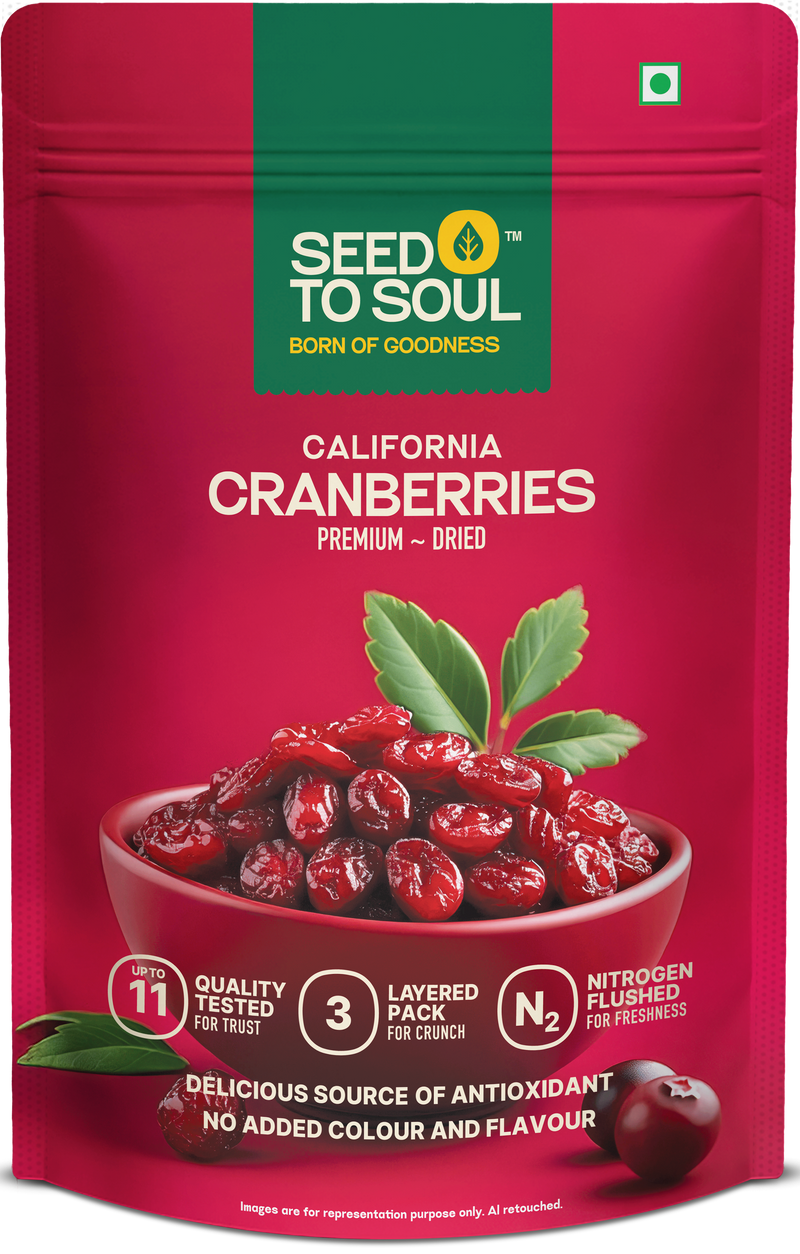
Dried cranberries have a sharp, tart flavour with a chewy, slightly sticky texture. The colour is a deep red, almost burgundy when dried well. Fresh cranberries are naturally very sour, so most dried versions include a small amount of added sugar to make them palatable.
When you pick up a pack, look for berries that are plump and uniformly red. Shrivelled, hard pieces or a dull brownish colour can indicate older stock.
The tart-sweet balance is what makes them useful in cooking. They cut through richness in a cheese board, brighten a grain salad, and add a fruity note to a trail mix that sweeter dried fruits cannot replicate. Our dried cranberries are whole, not sliced, which preserves more texture.
Cranberries are native to North America and harvested in autumn, typically October. The berries float naturally in flooded bogs at harvest time, which is how they're collected at scale. This flooding method is one of the most recognisable images in fruit farming.
Dried Blueberries: Flavour, Texture, and Uses
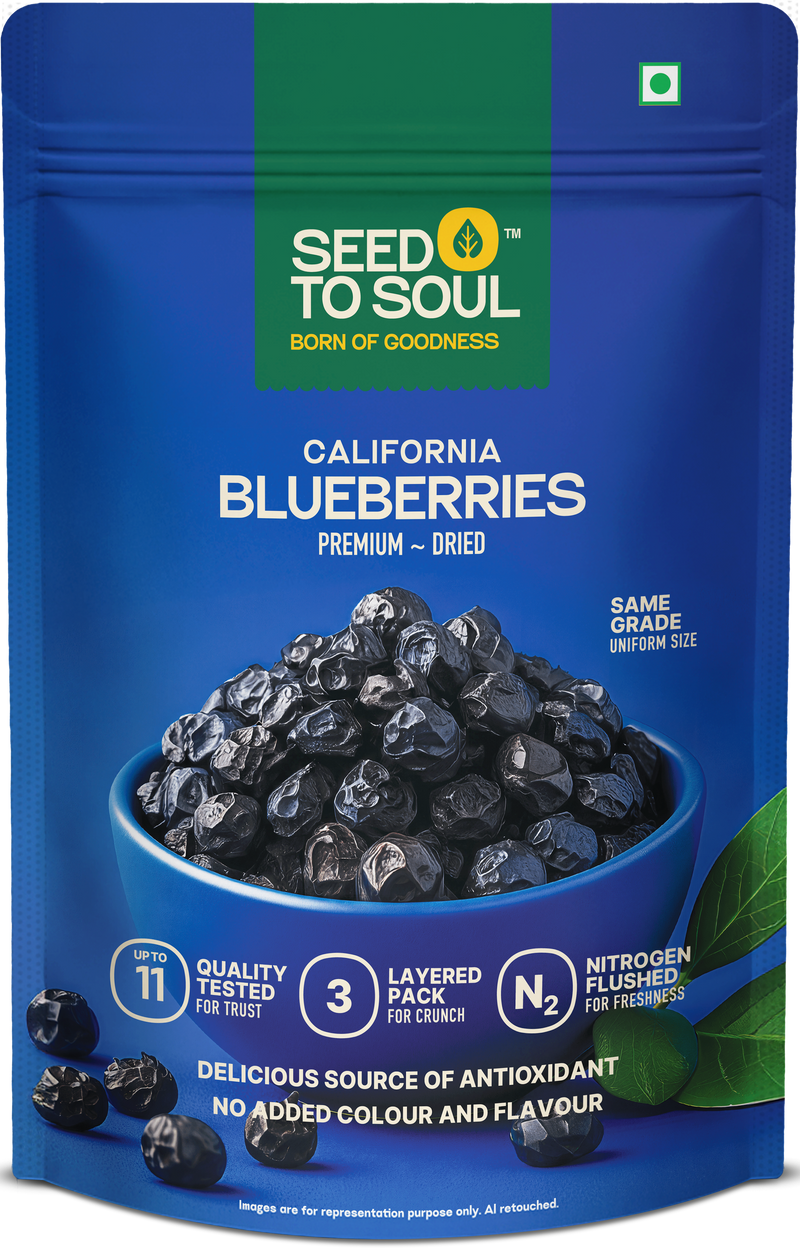
Dried blueberries are small, soft, and sweet with a mild tang. The flavour is deeper and more complex than raisins but gentler than dried cranberries. Their colour ranges from dark purple to a blue-black when dried properly.
Good dried blueberries should feel slightly soft between your fingers, not hard or powdery. A dusty or overly dry texture usually means the batch is old or was dried at too high a temperature.
Because they are sweeter, dried blueberries work well in oats, yoghurt, and baked goods where you want fruit flavour without sharpness. They also mix cleanly into homemade granola or muesli.
Blueberries are harvested from late spring through summer in North America and parts of Europe. The drying process typically uses warm air tunnels to preserve colour and reduce moisture to around 15–18%.
How to Compare Dried Berries at a Glance
| Berry | Taste | Texture | Colour | Common Use | Shelf Life (sealed) |
|---|---|---|---|---|---|
| Dried Cranberries | Tart-sweet | Chewy, slightly sticky | Deep red / burgundy | Salads, trail mix, pulao, baking | 12–18 months |
| Dried Blueberries | Sweet, mild tang | Soft, slightly firm | Dark purple / blue-black | Oats, granola, baking, yoghurt | 12–18 months |
Both varieties have a similar shelf life when stored correctly. Flavour and texture are the main reasons to choose one over the other. If you enjoy both, the blueberries and cranberries bundle is a practical way to keep both in stock at once.
How to Store Dried Berries Properly
Storage is where most people lose quality. Dried berries are sensitive to moisture, heat, and air.
Sealed packaging: Keep berries in their original sealed bag or transfer them to an airtight glass or food-grade plastic container immediately after opening. Exposure to air causes the berries to harden and lose their chew.
Temperature: A cool, dark pantry shelf works well for sealed packs. After opening, move the container to the fridge. Cold temperatures slow moisture loss and prevent the sugars from crystallising or the fruit from becoming too sticky.
Avoid these: Direct sunlight, a spot near the stove, or leaving the bag rolled loosely at the top. Any of these will shorten the texture life of the berries considerably.
Signs a batch has turned: A hard, dry, almost brittle texture is the first sign. A fermented or off smell is the second. If the colour has shifted to a dull brown throughout the batch, the batch is past its best.
A sealed, unopened pack stored in a cool pantry will easily last 12 to 18 months. An opened container in the fridge will stay good for 6 to 12 months. Label your containers with the date you opened them.
Ways to Use Dried Berries in Everyday Eating
Dried berries are more versatile than most people expect. Here are practical uses that actually work in an Indian kitchen.
In oats and porridge: Stir a small handful into warm oats in the last minute of cooking. The heat softens them slightly and they release some of their flavour into the oats. Both varieties work here.
In rice dishes: Tart dried cranberries fold naturally into a simple jeera rice or pulao. They add a pop of colour and a mild sourness that balances spiced rice dishes. Use about 2 tablespoons per cup of dry rice.
In salads: Toss them over a salad with cucumber, roasted pumpkin seeds, and a simple lemon dressing. The chew adds texture that croutons or nuts provide in other traditions.
As a trail mix base: Mix dried cranberries with cashews or walnuts and a small number of seeds for a simple, portable snack. The tartness of the berries stops the mix from tasting overly sweet.
In baking: Both varieties work in muffins, cookies, and quick breads. They hold their shape during baking better than raisins, so you get distinct fruit pieces in the finished bake.
With cheese: Tart dried cranberries are a natural match for mild cheese like paneer or fresh chèvre. This is a simple entertaining idea that needs no preparation.
You can explore the full range of dried berries available at Seed to Soul to see which variety fits your routine best.
Sources
- FSSAI (Food Safety and Standards Authority of India) — Food labelling and packaging standards for dried fruits: fssai.gov.in
- USDA FoodData Central — Nutritional composition data for dried cranberries and dried blueberries: fdc.nal.usda.gov
- University of Massachusetts Cranberry Station — Cranberry growing and harvest practices (general agricultural reference): ag.umass.edu
- Codex Alimentarius Commission — General standards for dried fruits and moisture content parameters: fao.org/fao-who-codexalimentarius
FAQs
What are dried cranberries made from?
Dried cranberries are made from fresh cranberries that have been dried to remove most of their moisture. Most commercially available varieties also contain a small amount of added sugar or oil to balance the fruit's natural tartness and prevent clumping.
How long do dried cranberries last once opened?
Once opened, dried cranberries typically last 6 to 12 months when stored in an airtight container in a cool, dry place. Refrigerating them after opening extends their shelf life and keeps the texture from hardening.
Can I use dried cranberries in Indian cooking?
Yes. Dried cranberries work well in rice dishes like pulao, grain salads, and chutneys where a tart, fruity note is welcome. They can also be folded into baked goods like muffins or cookies.
What is the difference between dried cranberries and dried blueberries?
Dried cranberries are tart with a chewy texture and a deep red colour. Dried blueberries are sweeter, softer, and smaller. Both are dried whole berries, but they have different flavour profiles and suit different uses.
How much dried fruit should I eat in a day?
A standard portion of dried fruit is around 30g, roughly a small handful. Because drying concentrates natural sugars, it is easy to eat more than intended, so portion awareness helps.
Are dried cranberries and craisins the same thing?
"Craisins" is a brand name for sweetened dried cranberries made by Ocean Spray. The generic term "dried cranberries" covers any brand's version of the same product. Ingredients and sweetness levels may vary between brands, so checking the label is always a good idea.
Written by the Seed to Soul Dry Fruits Editorial Team.